Best Brush for Wolfing: Which Firmness to Use and When to Move Up
Wolfing changes your hair, not just your routine. Here is which firmness carries each phase, when a hard brush earns its slot, and when to step back down.
A brush that felt right after a fresh cut can start skimming over your hair by the third week of a wolf. That is not proof you picked wrong - it is proof your hair changed. This guide covers which firmness does which job during a wolf, when a hard brush actually earns its place, and how to use one without turning your scalp into a test of endurance.
Why your brush stops working during a wolf
Wolfing means growing your hair past the length your current brush was bought for. As strands get longer and heavier, two things happen: the bristles have farther to travel before they reach the root, and there is more hair for every stroke to move. A brush that gripped cleanly at half an inch can slide over the surface at an inch and a half.
The fix is not to jump straight to the stiffest brush available. The aim across a wolf is to change your contact strength as your hair changes: medium hard first, hard later if you need it, soft again at the end. If your current brush still catches the roots with a light touch, keep using it. Firmness follows your hair, not the calendar.
Length is only half of it. Density matters just as much, and it is the reason two wavers at the same length can need different brushes. Thick hair fills the brush face faster, so the bristles lose their grip earlier in the phase. If your hair is both long and dense, expect the firmer slot to arrive sooner than the standard timeline suggests - and if it is long but fine, expect to stay on the same brush far longer than the calendar says.
What each firmness does during a wolf
Each firmness has a job, and the jobs are not ranked from worst to best. Thinking of them as three tools for three stages keeps you from buying firmness you will never use.
| Firmness | Job during a wolf | When it earns its slot | The mistake to avoid |
|---|---|---|---|
| Medium Hard | The main working brush for most of the wolf: it moves hair into your direction without bullying your scalp | From the first weeks of growth, and often for the whole wolf | Swapping it out early just because harder is supposed to be faster |
| Hard | The late-wolf pusher for long, heavy growth | Once Medium Hard skims over the top and you catch yourself pressing to compensate | Reading firmness as speed and pressing harder instead of covering more area |
| Soft | The finisher and the scalp-break brush | Short sessions on tender days, surface smoothing, and the return pass after a haircut | Retiring it the day you buy a firmer brush |
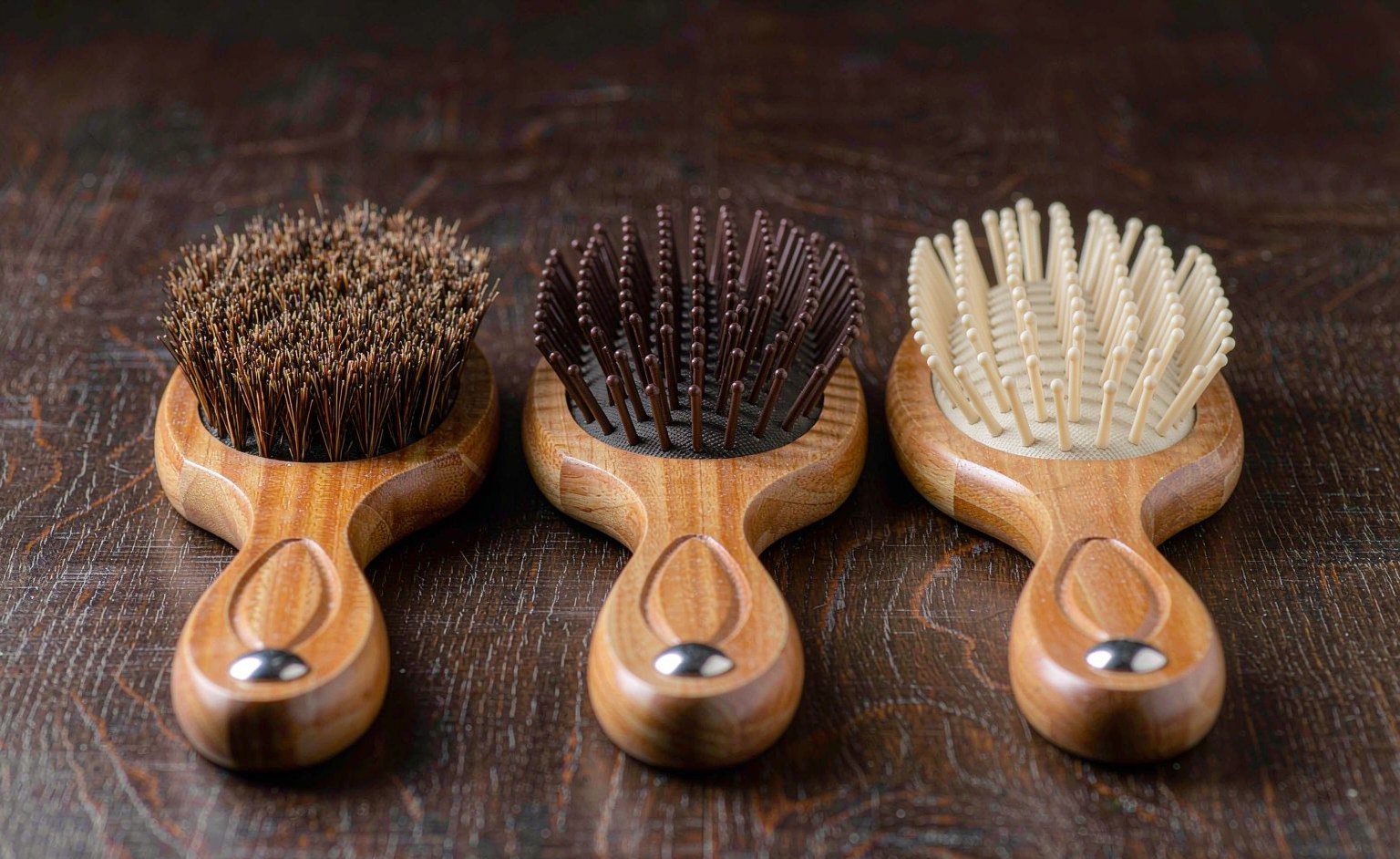
One naming note before you shop: the middle brush in a three-brush set is called Medium Hard, not Medium. Medium Hard is a boar and nylon blend, Soft is 100% boar, and Hard is 100% nylon. The material tells you more about how a brush behaves than the label does.
The blend is also why Medium Hard carries so much of the wolf. Pure boar bristles give a smooth, scalp-friendly feel but bend early in heavy hair. Pure nylon stays stiff but asks for a lighter hand. The mix keeps enough backbone to move grown-out hair while keeping enough give for daily sessions, which is exactly the balance the middle weeks demand.
Weeks 1 to 4: stay on Medium Hard and let your length catch up
The first month of a wolf is mostly a patience phase. Your hair is still short enough that a medium hard brush reaches the root without help, and the work that matters is angle, coverage and consistency - not force. Daily sessions with light pressure and full contact beat any heroic evening with a stiffer brush.
This is also when the classic mistake happens: reading week four as a graduation date and buying hard early. If your medium hard brush is still gripping, a firmer bristle will not make waves arrive sooner. It just moves the irritation forward. The week-by-week breakdown of what to actually do in this phase is here:
Wolfing week by week: what to focus on in each phase
Use these weeks to lock in coverage instead of pressure. Work in the same order every session - crown, then sides, then back - so no area gets skipped on tired days. Count strokes by section rather than by total time, because uneven coverage is the most common reason one side connects later than the other. None of this needs a firmer brush; it needs the brush you already have, used the same way every day.
Weeks 5 to 8: four signals it is time to move up to Hard
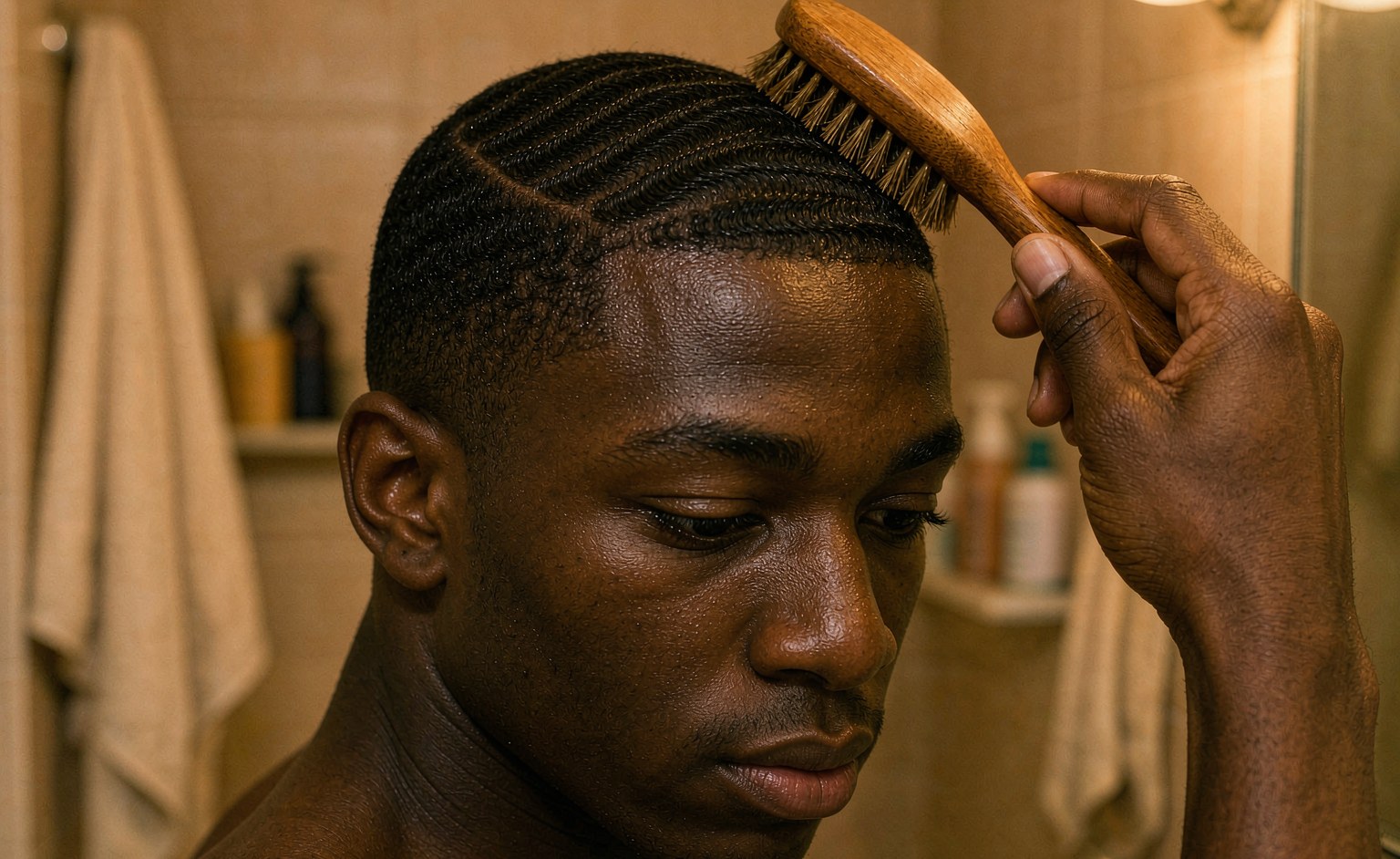
Somewhere in the middle weeks, most wavers hit the point where the brush starts telling them it is outmatched. Four signals, in rough order of reliability:
- The brush skates. Passes that used to grab now glide over the surface, and your hair looks no different after a session.
- You catch yourself leaning in. When extra pressure is the only way to feel contact, the bristle is the problem, not your arm.
- Length has clearly passed the bristles. Hair folding over on itself means the bristles can no longer reach through it.
- Your pattern stalls while your routine stays the same. If everything else is constant and progress stops for a week or more, contact strength is a fair suspect.
Any one of these is a hint, not an order. Two or more together are a real case for trying hard. And if none of them show up, stay where you are - plenty of wavers finish a wolf without ever needing the firmest brush. The full guide to this stretch of weeks is here:
Wolfing weeks 5 to 8: the full phase guide
One more thing worth saying out loud: switching brushes mid-wolf does not erase progress. The pattern you trained at shorter lengths does not fall out because you changed tools. The firmer brush is there to keep training the growth you already have, not to start over.
Using a Hard brush: more contact, not more pressure
When you do move up, the trade is simple: you gain bristle stiffness, so you give back force. Flat wrist, slower strokes, smaller sections. Let the bristles do the reaching. A hard brush used with hard pressure is how scalps get sore and hairlines get punished for zero extra progress.
It helps to know what you are holding. The AOSINA Hard Wave Brush is 100% nylon - that is why it stays stiff through long, heavy growth. Medium Hard blends boar and nylon, and Soft is pure boar. Material explains behavior better than any firmness nickname.
HardHard Wave Brush for Thick, Coarse and Dense Hair
A hard wave brush with firm nylon bristles for stronger pull on thick, coarse and dense hair. For longer wolfing sessions and advanced wave training.
Treat the first week on hard as a calibration period: shorter sessions, light pressure, and stop at the first sign of soreness. If your scalp stays comfortable and the brush is finally gripping, you have found its slot.
Order matters more on hard than on any other brush. Start where your pattern is weakest - for most wavers that is the back and the area just behind the ears - while your attention is fresh, then move to the crown and sides. Keep the strokes slow enough that you can feel each one. Fast, hard passes skip across the very hairs the brush is there to reach, and they are the habit most likely to send you back to medium hard with a sore scalp.
Buy the AOSINA Hard Wave Brush on Amazon
When to step back down to Medium Hard
Going firmer is not a one-way door. Step back down if your scalp stays red after sessions, if you start finding short broken hairs on the brush or the durag, or if your hair looks puffier after brushing instead of flatter. Those are signs the setup is too aggressive for today, not proof that wolfing is harming you by design.
A day on the medium hard brush, or a short soft-brush session, lets the irritation settle without costing you the phase. Wavers who treat firmness like a dial instead of a ladder tend to wolf longer and lose less comfort doing it.
Stepping down is also the right answer on days when the hair itself is out of condition. Dry, unmoisturized hair pushes back harder than usual, and a firm brush over dry growth invites frizz and broken strands. Rehydrate, ease off for a session, and come back once the hair behaves again. The brush did not stop working; the hair was just not ready.
Coarse hair during a wolf: three extra notes
This page started life as a coarse-hair guide, so it is worth keeping what still matters. One: coarse strands resist bending, so early progress can look slower than it feels - judge it by closing forks and a flattening surface, not by the mirror right after a session. Two: coarse hair usually needs the firmer slot earlier than fine hair at the same length, because the strands push back harder. Three: coarse scalps are not tougher. The bristle gets to be firm; the pressure does not.
If you want the full hair-type breakdown - density, length and row count instead of wolfing stages - that lives on the coarse and thick hair guide. And if you are still deciding which single brush to start a wolf with, the overall choosing guide walks the decision in order:
Start with the full guide to choosing a wave brush
Compare soft, medium hard and hard wave brush firmness
If you are stocking up for a wolf, the hard brush is where this guide earns its keep - but most wavers arrive there by way of Medium Hard. The three-brush set covers the whole arc from fresh cut to final pass, with Medium Hard in the middle slot:
Buy the AOSINA Medium Hard Wave Brush on Amazon
Buy the AOSINA 3-Brush Wave Set on Amazon
Do I have to use a hard brush to wolf?
No. Hard is for the back half of a wolf, and only once a medium hard brush has stopped reaching through your hair. Starting hard on a fresh cut or short growth mostly buys scalp irritation. Plenty of wavers complete a wolf on Medium Hard alone and bring the hard brush out for the second wolf.
How long should I stay on Medium Hard before switching?
There is no honest number of weeks. Switch when the four signals above show up - somewhere in the middle weeks for most hair, earlier for dense or coarse growth. Length and growth speed vary too much between people for a calendar rule, so let the brush's grip make the call.
Related reading
WOLFING · COARSE HAIR4C Hair Waves: The Complete Brush and Routine Guide
4C hair is the tightest, densest texture in the 4-type range, and that changes the routine: more pull, more moisture, more time. Here is what actually works.
Read article → Wave Troubleshooting
Why Do My Waves Look Frizzy After Brushing?
Waves looking puffy after a brush session? Check pressure, firmness, direction and finishing before changing your whole routine.
Read article →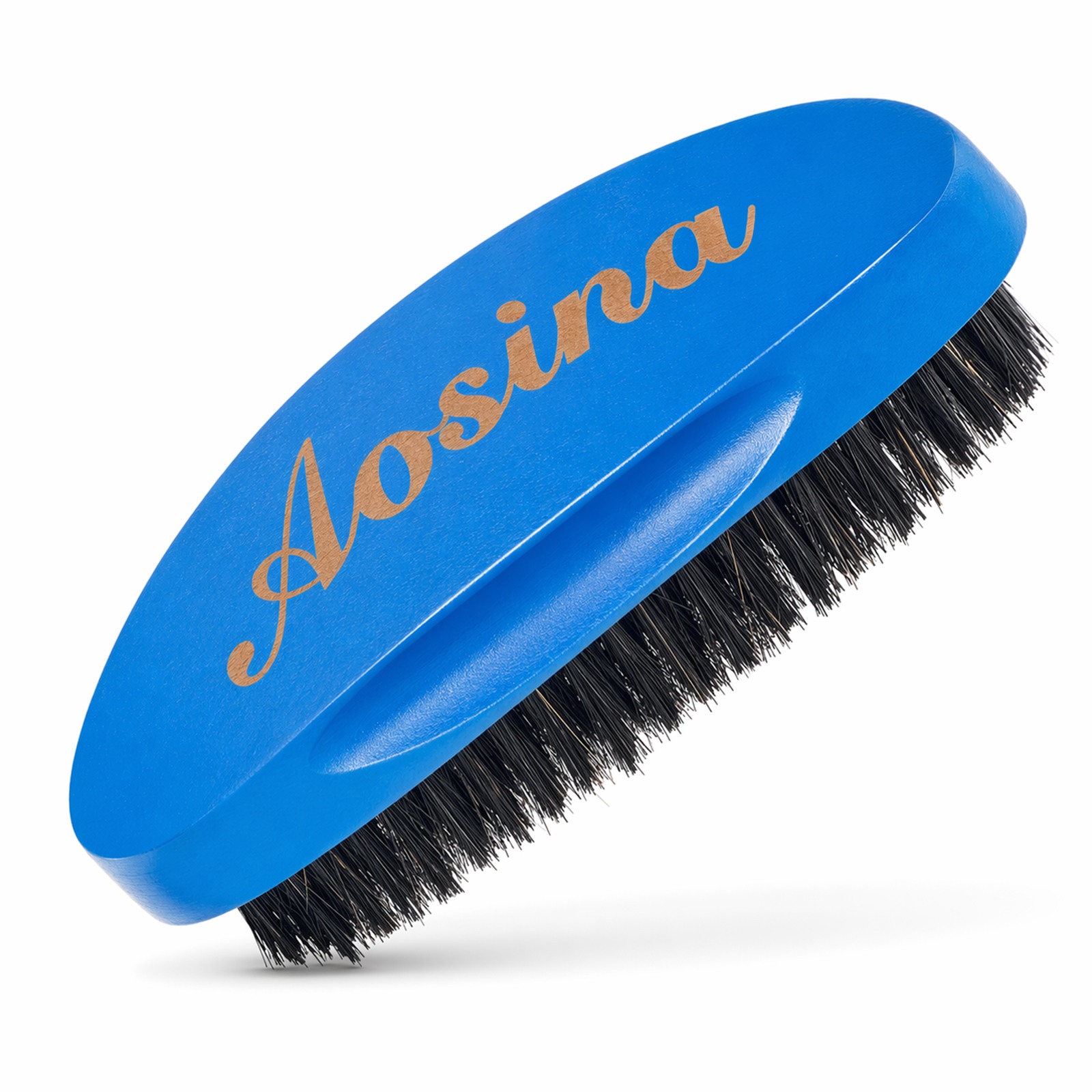 CHOOSING A BRUSH
What Is a Medium Hard Wave Brush? Definition and Where It Fits
Medium Hard names a specific construction: boar and nylon bristles blended in one head. This page defines it, explains why the middle ground exists, and shows who it fits.
Read article →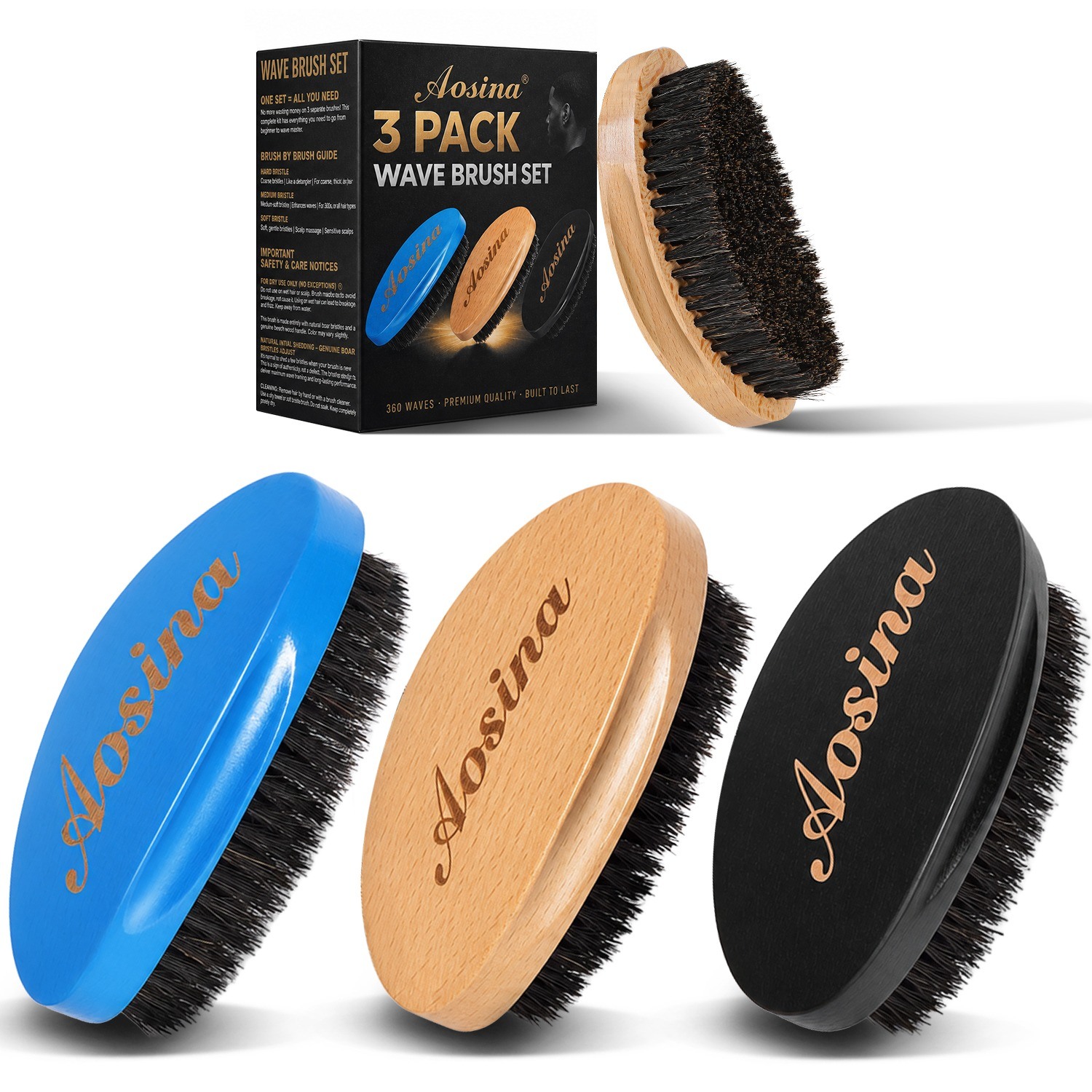 BUILD YOUR ROUTINE
3 Brush Wave Kit: What Each Brush Does and When to Use It
Each brush in a three-brush wave kit does a different job: Medium Hard carries the daily sessions, the pure boar Soft brush finishes and handles fresh cuts, and the stiff nylon Hard brush is built for wolfing and coarse hair.
Read article →