Waves After the Gym: What to Do in the First 20 Minutes
Sweat softens the set you brushed in and sits at the roots where brushing reaches last. The reset order for the first 20 minutes after a workout, how to handle sweat on non-wash days, and why the post-gym session belongs to a soft brush.
What sweat actually does to a wave pattern
Sweat is mostly water plus salt, and it does two things to a wave pattern. First, the moisture softens the set you brushed in earlier, the same way humid air does: hair that has been trained into rows starts drifting back toward its natural curl. Second, the salt does not evaporate with the water. It dries onto the hair and the scalp, and dried salt makes hair feel stiff and rough instead of clean. Neither of these is a disaster. But if you leave a workout session sitting on your scalp for the rest of the day, you are asking the pattern to hold its shape while soaked in the one thing that undoes it.
One thing worth saying up front: working out is not the problem, and skipping workouts to protect waves is a bad trade. The pattern does not fall apart because you trained. It falls apart because the sweat was never dealt with. The difference between a lifter with deep waves and a lifter whose pattern fades is usually the twenty minutes after the session, not the session itself.
The first 20 minutes: a reset order that works
- Blot, don't scrub. Press a towel against the hairline and crown where sweat collects. Rubbing a towel across the surface roughs up the exact rows you are trying to keep.
- Decide how wet you actually are. Light sweat needs dampening, not washing. Heavy sweat, or a hat that came off soaked, deserves a quick warm water rinse.
- Dampen the hair slightly. A spray bottle or wet hands is enough for most sessions. You want the hair pliable, not dripping.
- Brush your normal pattern. Same direction, same angles, light passes. The hair is at its most trainable while it is damp.
- Cover it. Durag on, and leave it on until the hair is fully dry. The set locks in while it dries, not while you brush.
The order is the same one that fixes humidity frizz, because the cause is the same: moisture has softened the set, and the fix is to re-dampen, re-brush, and let it dry under compression. If your post-gym hair regularly comes out fuzzy, that article breaks the frizz side down in more detail:
Waves Frizzy After Brushing: Causes and Fixes
What not to do right after a workout
- Don't dry-brush salt-stiff hair. Once the salt has dried on the hair, brushing it dry just grinds that grit through your pattern and your brush. Dampen first, always.
- Don't reach for the hard brush because the hair feels like more work. Sweaty, friction-prone sessions are soft-brush territory, and we will get to why below.
- Don't leave a soaked durag on all afternoon. Compression only works when the hair dries. A wet durag over wet hair is a steam bath, and steam is a faster frizz machine than open air.
- Don't judge the pattern in the mirror right after the session. Sweat-flat hair says nothing about your progress. Judge it the next morning.
If it's not a wash day: handling sweat without shampoo
This is the part people overcomplicate. Sweat itself is water-soluble. Warm water alone rinses most of the salt off the hair and scalp, no shampoo required. Shampoo exists to remove oil and product buildup, and those build up over days, not over one session. So on a non-wash day, a warm water rinse, a light brush while damp, and a durag until dry handles the sweat completely.
The trap is the opposite instinct: shampooing every time you sweat. Scalp that gets stripped daily tends to swing dry, and dry, tight scalp plus daily brushing is how sessions start to hurt. Keep real wash days spaced the way your scalp tolerates, and let water do the in-between work. If your hair smells, feels waxy, or has visible product in it, that is the actual signal to wash, not the presence of sweat alone.
The brushing itself matters as much as the rinsing here. If you are unsure about direction and pressure for the reset pass, the full technique breakdown is here:
How to Brush 360 Waves: Pattern, Angles and Direction
Durag timing after training
The durag's job after a workout is simple: it keeps the re-brushed hair compressed while it dries, and it stops friction from undoing the set. The timing rules that matter: put it on over hair you have already re-brushed damp, not over hair you left to air-dry loose; swap to a dry durag if the first one came out damp; and take it off once the hair is actually dry, because a durag worn for many hours past that point mostly serves you warmth and a flat crown.
For people training in the evening, the good news is that the post-gym reset and the pre-bed routine are the same thing. Rinse or dampen, brush the pattern, durag, sleep. You are not adding a step to your day, you are just doing the step you already do at the right time.
The right brush for a post-gym reset
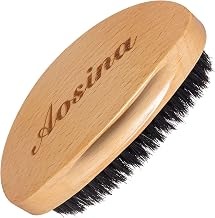
A reset pass is soft-brush work. Your scalp has just spent an hour under a hat or headband, warm and damp, and the hair is swollen with moisture. The AOSINA Soft Wave Brush is 100% pure boar bristle, and it is the right tool for this job: boar lays hair down gently, grips without scratching, and re-trains slightly damp hair with light pressure. In a reset session, pressure is not the missing ingredient. Consistency is.
AOSINA Soft Wave Brush (100% pure boar bristles)
The firmer brushes keep their own schedule. The Medium Hard, a boar and nylon blend, carries the main training sessions as your hair grows and thickens, and it does that job well. But a sweaty scalp right after training is not where you want firm filaments. Save the firm work for dry hair and fresh sessions, and the brush will last longer too.
One care note if you train often: sweat and a humid scalp mean your brush needs washing more often than the average user's. Rinse it on your wash days, let it air dry bristle-down, and never pack it away damp.
How to Clean a Wooden Handle Wave Brush (and Dry It Right)
When the flat post-gym look isn't the sweat
- Buildup. If the pattern looks dull and fuzzy even after the reset, layered product and dried sweat you never fully rinsed are the usual suspects. That is a wash-day signal, not a technique problem.
- A worn-out brush. Bristles that have lost their grip stop laying hair down, and the weakness shows up first in quick reset passes, where every stroke has to work.
- Judging the wrong window. Hair right out of a durag always looks flatter than it will an hour later. Compare mornings to mornings.
- A fresh haircut. After a cut, everything looks softer and fuzzier for a week or two regardless of how well you handled the gym.
When to Replace Your Wave Brush: The Honest Signs
The gym and the wave pattern get along fine once the handoff is managed. Blot the sweat, dampen, brush the pattern you already know, and cover it while it dries. Shampoo on your schedule, not every session. Keep the reset passes soft and short, and let the firmer brushes do their work the rest of the week. Do that, and training days stop costing you pattern depth at all.
Related reading
Wave TroubleshootingWhy Do My Waves Look Frizzy After Brushing?
Waves looking puffy after a brush session? Check pressure, firmness, direction and finishing before changing your whole routine.
Read article →Wave TroubleshootingCan You Over-Brush Your Waves? 3 Signs You Are Doing Too Much
Yes, you can over-brush 360 waves. The three signs - stubborn frizz, broken short hairs, and a scalp that stays irritated - what a sensible daily limit looks like, and how to recover when you have overdone it.
Read article →Wave TroubleshootingWaves Fall Apart in Humidity: Why It Happens and What Helps
Moist air softens the set you brushed in and hair drifts back toward its natural curl. Why humidity frizz happens, the order that holds up before you go out, and how to reset when you get home.
Read article →Wave TroubleshootingScalp Pain From Brushing Waves: 4 Causes and When to Stop
Brushing waves should feel like pressure, not pain. The four usual causes of scalp pain from brushing - pressure, brush firmness, the moisture point, and worn bristles - and the moments when the right move is to stop.
Read article →