Does Brushing Make Hair Grow? What a Wave Brush Actually Does
Brushing does not make hair grow - hair grows from the follicle, not the brush. What a wave brush actually does, what really affects growth, and why breakage gets mistaken for slow growth.
The honest answer first
No. Brushing does not make hair grow. Hair grows out of follicles under your scalp, and the speed, thickness, and density you get are set by genetics, general health, and time. A brush works on the surface of your head and cannot change any of that. Anyone claiming a specific brush grows new hair is selling you a story.
But the myth does not come from nowhere, and dismissing brushing entirely would be its own mistake. Brushing is one of the most important things you do for 360 waves. It just works on a completely different problem than growth. This article separates the two so your effort goes where it counts: training the pattern, protecting the hair you already have, and letting biology handle the growing.
What a wave brush actually does
A wave brush does three jobs, and none of them is growing hair.
- Direction. Every stroke lays the hair flat in one direction per section. Repeated thousands of times, that is what bends the natural curl pattern into ripples.
- Compression. The bristles press the trained hair down against the head so the pattern sets and holds instead of springing back up.
- Distribution. Brushing spreads the natural oils from your scalp down the hair strands, which conditions them on the way.
That third job is where most of the confusion lives. Well-distributed oils make hair look healthier, shinier, and thicker than dry, unbrushed hair. Healthier-looking is real, but it is condition, not growth. Nothing new appeared - the hair you already have just looks better taken care of.
Why the growth myth sticks around
The old advice says brushing stimulates the scalp and increases blood flow to the follicles. There is a grain of surface truth in it: brushing does raise circulation at the skin level for a short while. But there is no reliable evidence that this produces new hair or speeds up growth. If stimulation alone grew hair, people wolfing for months with hours of daily brushing would have visibly denser heads than before they started. That is not what anyone sees, including the people doing it.
The second reason the myth survives: brushed hair simply looks like it is doing better. It is detangled, laid down, and shiny, so the mirror seems to confirm that something is growing. What you are seeing is styling. It fades when the hair gets wet and comes back when you brush again - which is the signature of appearance, not biology.
What actually affects hair growth
Growth happens at the follicle, under the skin, and the things that influence it are mostly systemic:
- Genetics. Growth rate, hair density, and how long each hair stays in its growth cycle are inherited traits.
- Overall health. Sleep, nutrition, hydration, and stress all show up in hair over time, in both directions.
- Scalp condition. A clean, calm scalp supports the follicles you have. Caked product, buildup, and constant irritation do not help them.
- Keeping the hair you grow. This is the underrated one - hair that snaps off before it gets long looks exactly like hair that never grew.
For many people hair grows around half an inch a month, though it varies from person to person and even through the year. None of that can be rushed by pressing a brush into your head harder.
Breakage is what usually looks like slow growth
Here is where wave culture gets it backwards. People say my waves are not growing, when the hair almost always is growing. What looks like no progress is usually breakage: dry brushing with too much pressure, a brush that is firmer than the stage calls for, or bristles worn jagged enough to snap hair off. Breakage running at the same rate as growth looks exactly like a permanent plateau.
So the useful question is not whether brushing makes hair grow. It is whether your brushing is breaking hair as fast as it grows. Pain, soreness, and tenderness are the warning lights on that road.
Scalp Pain From Brushing: 4 Causes and When to Stop
The brush itself deserves a check too. Bristles that are bent, split, or missing drag instead of glide, and a brush past its working life quietly does more damage with every session.
When to Replace Your Wave Brush
How growth and the wave pattern interact
Waves are trained, not grown - but growth still matters, because every fraction of an inch of new hair comes in untrained. The pattern you see is the hair that has already been brushed into shape. New growth is the reason the work never really ends: you keep folding each wave of fresh length into the pattern as it arrives.
This is also the real logic behind wolfing. You let length accumulate for weeks while brushing the new growth into the pattern, so the deep waves that form have more hair working with them. The brush does not make the hair grow faster during those weeks - it makes the growing hair adopt the pattern.
Wolfing Week by Week: What to Do in Weeks 1-4
Which is why consistency beats intensity every time. Twenty light minutes a day trains all the new growth as it comes in. Two punishing hours once a week, with a sore scalp in between, trains less and breaks more.
Keep your scalp a good place for hair to grow
A brush cannot produce growth, but the conditions on your scalp can support the growth you already have. That means keeping the scalp clean, not letting product build up layer over layer, and not brushing an irritated scalp raw. None of this is exciting, and all of it is where a sustainable routine actually lives.
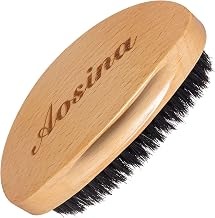
The brush you use matters here. A soft brush with 100% pure boar bristles flexes and spreads the load across the scalp, which makes it the natural choice for long daily passes and for anyone whose scalp runs sensitive. Save the firmer brushes for the training work they are built for.
AOSINA Soft Wave Brush (100% pure boar bristles)
And keep the brush itself clean. A brush loaded with old oils, product, and dead skin redistributes all of that back into a scalp you are trying to keep calm.
How to Clean a Wooden Handle Wave Brush (Without Ruining It)
Spending the effort where it counts
If you were brushing extra hours hoping to force growth, here is where that effort goes instead:
- Keep sessions consistent, not punishing. Daily light-to-moderate brushing beats occasional marathon sessions for both the pattern and the scalp.
- Protect what you train. A durag or wave cap at night keeps the compression going while you sleep. Either one works - pick based on comfort.
- Handle new growth as it comes in. Short sessions on the fresh hair at the crown and hairline keep the whole pattern connected.
- Take care of the inputs. Sleep, food, and stress management are unglamorous, and they are the actual growth levers you control.
When it comes to the brush, match it to your stage rather than your ambitions. For established waves and deeper training passes, the medium hard - boar and nylon blended - is the workhorse in the middle of the ladder.
AOSINA Medium Hard Wave Brush (boar and nylon blend)
The bottom line
Brushing does not make hair grow, and it never will - hair grows from the follicle, and the brush meets it after it leaves the scalp. What brushing does decide is what that growing hair becomes: trained, compressed, and connected into a 360 pattern, or left to curl back on itself. Do the brushing for the pattern, keep the scalp and the brush clean so the biology is never working against you, and let genetics and time handle the growing. That division of labor is how waves actually get built.
Related reading
WAVE BASICSHow to Get 360 Waves: A Beginner's Step-by-Step Guide
360 waves are a pattern built from repeated brushing, moisture and compression. Here is the full beginner routine, how to brush in a pattern, and how long it realistically takes.
Read article →WAVE BASICSHow to Brush 360 Waves: Pattern, Angles and Direction
Most people brush hard and in circles. The pattern only forms when every stroke follows the same direction. Here is how to brush by section, at what angle, and for how long.
Read article → WAVE BASICS
How Long Does It Take to Get 360 Waves?
Anyone promising waves in a week is selling something. Here is a realistic timeline by stage, the five things that actually decide how fast you get there, and why progress stalls.
Read article →Wave TroubleshootingWhy Do My Waves Look Frizzy After Brushing?
Waves looking puffy after a brush session? Check pressure, firmness, direction and finishing before changing your whole routine.
Read article →